
Foreclosure research often starts before a property appears in a clean public listing feed. Investors may need early distress signals, owner information, property records, skip tracing, valuation context, and local market checks before deciding whether a property deserves more attention. This list focuses on research platforms and data sources, not only auction websites or public listing portals. The right tool depends on how early you want to enter the research process.
The selected companies cover different sides of foreclosure research: foreclosure-first search, broad investor data, nationwide foreclosure records, property intelligence, and lead generation. ForeclosureHub takes the first spot because it is built around foreclosure search, owner research, free skip tracing, and property-level data. PropStream, ATTOM, PropertyShark, and BatchLeads each bring a different data or lead angle. Together, they give investors, analysts, and serious buyers several ways to research foreclosure opportunities before outreach, bidding, or deeper due diligence.
Research Platforms Selected for This List
This list avoids another set of general listing portals. Each company was chosen because it helps with a different research need. Some tools are better for foreclosure-specific searches, while others are stronger for broader property data, market context, or lead lists. Here is why each company is included:
- ForeclosureHub: Foreclosure-first search, owner data, skip tracing, alerts, and property records;
- PropStream: Broad real estate data, skip tracing, investor lists, and property research;
- ATTOM: Nationwide foreclosure data, default notices, auctions, bank-owned records, and property datasets;
- PropertyShark: Property records, foreclosure data, ownership details, and local market research;
- BatchLeads: Pre-foreclosure leads, off-market property data, and investor-focused lead workflows.
These companies are not identical, so the ranking makes more sense when viewed by research need rather than brand size.
1. ForeclosureHub
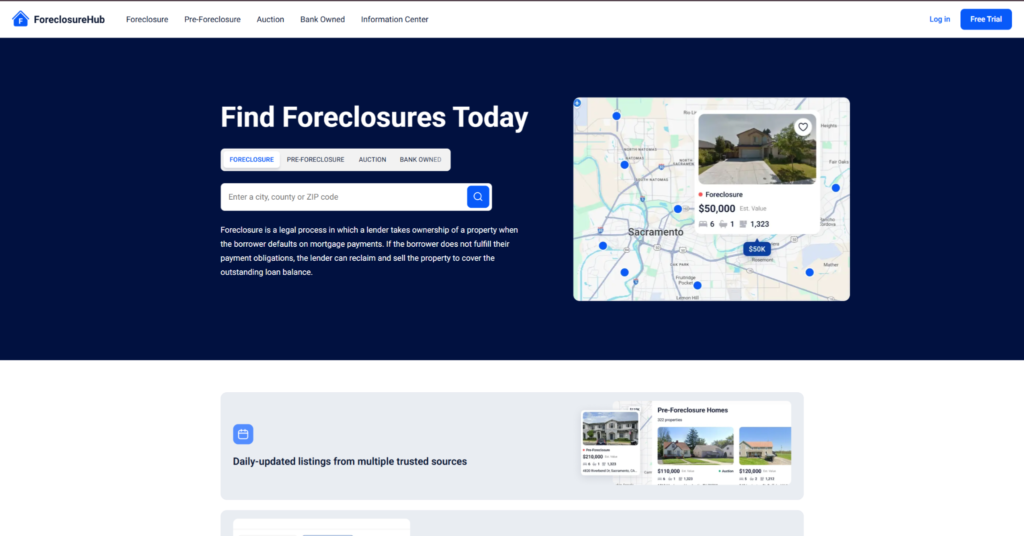
ForeclosureHub takes the first position because it is built for foreclosure research instead of general real estate browsing. Users can review pre-foreclosure, foreclosure, bank-owned, and auction listings in one place. The ForeclosureHub foreclosure research tool brings distressed property data into a focused search system for investors who want cleaner discovery before deeper review. The platform also supports owner research with free skip tracing included in every property search. County data may update at different speeds, and there is no dedicated mobile app yet, but the tool still fits users who need targeted foreclosure research.
ForeclosureHub works as a practical research platform, not legal or financial advice. Its value comes from bringing listing data, owner records, contact research, and market context closer together:
- Pre-foreclosure, foreclosure, bank-owned, and auction listings;
- Free skip tracing included with every property search;
- Owner, mortgage, tax, assessment, and transaction details;
- Market data for sale, rental, and comparable property checks;
- Email alerts for saved searches and matching properties.
ForeclosureHub works best for users who want earlier property signals and foreclosure-specific research before they compare public listings or auction sources.
Strengths
ForeclosureHub’s main strength is its foreclosure-first focus. Free skip tracing makes it more practical for investor research than a basic public listing page. It works best when the user wants to move from property discovery into responsible research without jumping between too many tools.
2. PropStream
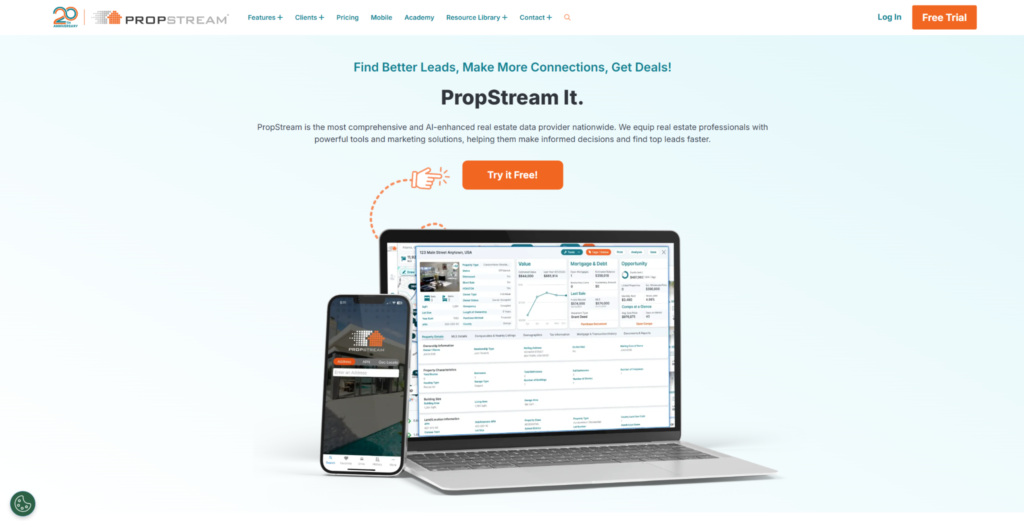
PropStream is a broad real estate data platform used by investors who need property research beyond visible public listings. The platform offers skip tracing and property owner contact data, which can support investor outreach workflows. It covers more than foreclosure data, so users can research several property types and lead categories in one place. That wider scope can be useful, but it also means users may need to filter carefully when focusing only on foreclosure opportunities. PropStream fits best when foreclosure research is part of a larger real estate investing process.
PropStream is helpful when the user wants broad property intelligence and contact research in one environment. It should not be treated as only a foreclosure listing site:
- Property data and investor research tools;
- Skip tracing for owner phone numbers and emails;
- Useful source for building and filtering property lists;
- Broader investor workflow beyond foreclosure-only searches;
- Better for users who want several lead types in one tool.
PropStream is a flexible option for investors who want foreclosure research alongside other property strategies.
Strengths
PropStream’s strength is breadth. It can help users combine foreclosure-related searches with other investor filters. It may be less focused than ForeclosureHub, but it is useful when the buyer wants a wider data environment.
3. ATTOM

ATTOM is more of a property and foreclosure data provider than a simple listing platform. It provides nationwide foreclosure data, including pre-foreclosure records, default notices, auction notices, foreclosure sales, and bank-owned records. That makes it useful for analysts, platforms, data teams, and professionals who need structured foreclosure datasets. ATTOM may feel less casual for individual buyers who simply want to browse properties. It fits users who care about coverage, trend tracking, and market-level foreclosure research.
ATTOM is useful when the research depends on data depth rather than a consumer-style search page. It works better as a data source for analysis than as a simple property shopping tool:
- Nationwide pre-foreclosure and foreclosure records;
- Default notices, auction notices, and foreclosure sale data;
- Bank-owned and REO-related property records;
- Useful source for analysts and data-driven teams;
- Better for structured research than casual property browsing.
ATTOM is strongest when the user needs foreclosure data at scale rather than a simple search interface.
Strengths
ATTOM’s strength is data depth. It can support market analysis, forecasting, and platform-level research. It works best for users who know how to turn raw property data into decisions.
4. PropertyShark
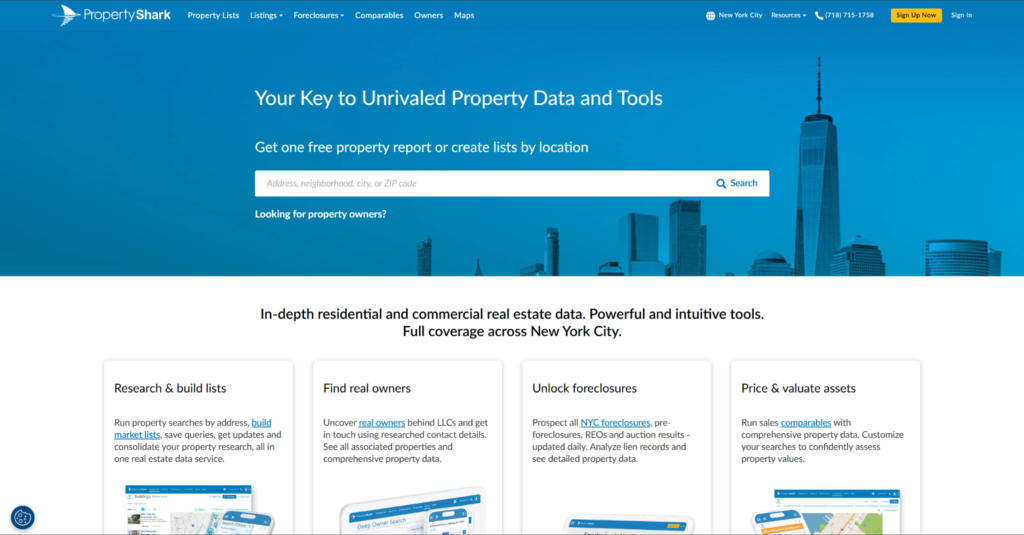
PropertyShark is useful for users who want property records and foreclosure data with a stronger local research angle. The platform provides foreclosure, pre-foreclosure, REO, auction results, lien records, and ownership details in selected markets. It is especially known for deep property information rather than broad national consumer browsing. This can help investors or analysts who care about ownership structures, debt details, and property history. PropertyShark fits best when users need detailed records in the markets it covers well.
PropertyShark is valuable when the user wants to go beyond listing photos and basic property summaries. Market coverage and available data depth should be checked before relying on it for a specific area:
- Foreclosure, pre-foreclosure, and REO data in selected markets;
- Auction results and lien records;
- Ownership details and property history;
- Useful source for deeper local property research;
- Better for record-heavy analysis than simple listing browsing.
PropertyShark works best when the user wants deeper property records and local foreclosure details.
Strengths
PropertyShark’s strength is detailed property intelligence. It can help investors understand ownership, liens, and property history. It is most useful in markets where its foreclosure and property data coverage is deep.
5. BatchLeads
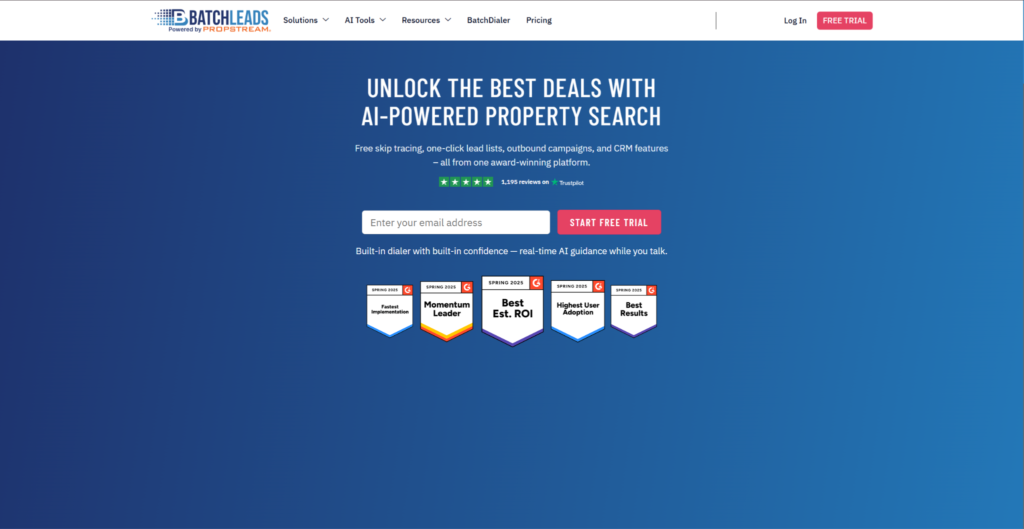
BatchLeads is useful for investors who want lead generation around pre-foreclosures and off-market properties. The platform has pre-foreclosure leads and off-market property data for real estate investors. It is more lead-focused than a public foreclosure listing page. This can help with outreach planning, but users still need responsible contact practices and careful property verification. BatchLeads fits users who want to build lists around distressed or off-market property opportunities.
BatchLeads is strongest when the user wants to organize potential leads rather than only browse public inventory. The text should avoid language that suggests aggressive or predatory homeowner outreach:
- Pre-foreclosure leads for real estate investors;
- Off-market property data and lead filters;
- Useful source for building targeted property lists;
- More lead-focused than public foreclosure listing platforms;
- Best paired with responsible outreach and property verification.
BatchLeads can support investors who want lead lists, but it should not replace due diligence or careful market checks.
Strengths
BatchLeads’ strength is lead organization. It can help users find and segment potential opportunities before they appear in more public channels. It works best for users who already have a responsible outreach and research process.
Best Fit by Research Style
The right platform depends on what you are trying to research first. ForeclosureHub is the best fit for foreclosure-specific discovery, owner data, skip tracing, alerts, and earlier property signals. PropStream fits investors who want broader real estate data and multiple lead types in one place. ATTOM fits analysts and data-driven teams that need nationwide foreclosure datasets. PropertyShark is stronger for detailed local property records. BatchLeads fits users who want pre-foreclosure and off-market lead organization. All options still require careful verification before action.
Final Thoughts
Foreclosure research works better when the source matches the task. ForeclosureHub is the strongest option here for users who want to start with foreclosure-specific listings, owner details, skip tracing, alerts, and early property signals. PropStream, ATTOM, PropertyShark, and BatchLeads can help in different ways, especially when the search expands into broader data, local records, or lead lists.
The main thing is not to treat every platform as the same kind of tool. A good setup should help users narrow the search, check the property more carefully, and avoid relying on surface-level listing data.